Inside Hambela: notes from a Sidamo washing station.
Every bag of our Hambela Estate says "washed process" on the label. Here's what those two words actually involve, written from a week spent on the drying beds — starting with the 5am shift.
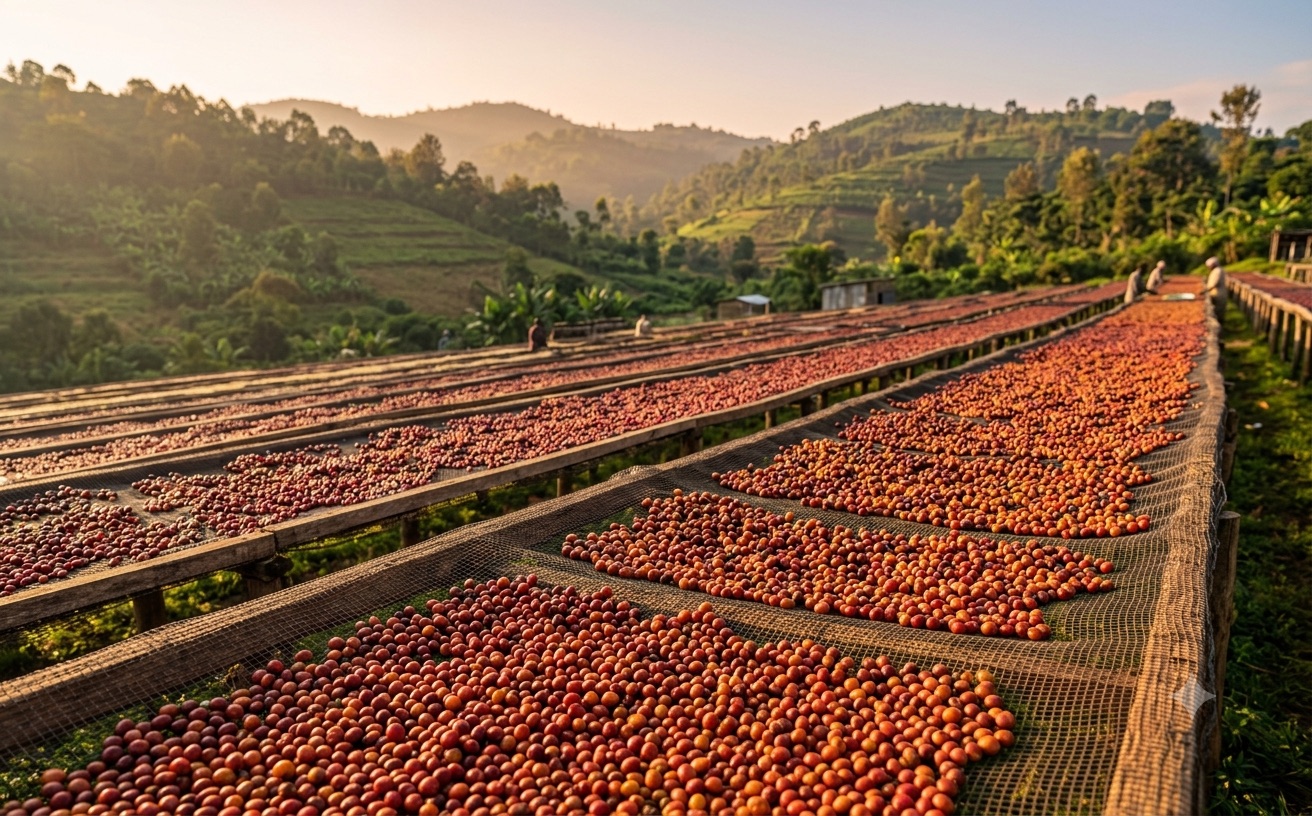
The washing station wakes before the light does. By five, the receiving tanks are already filling: smallholder farmers — some walking an hour or more — arrive with the morning's picking, sacks of cherries in reds so deep they look black in the pre-dawn. Each sack is weighed, logged against the farmer's name, and tipped into water.
That first tank is the first sort. Ripe cherries sink. Underripes and floaters rise, get skimmed off, and go to a separate, lower grade. Nothing is wasted, but nothing substandard moves forward either. What sinks is what eventually reaches your kitchen.
What "washed" actually means
A coffee cherry is a fruit, and the seed inside — the bean — is wrapped in a layer of sticky sugar called mucilage. The washed process strips all of that away before drying. The cherries are pulped the same evening they arrive, then the beans sit in fermentation tanks overnight while naturally occurring enzymes loosen the mucilage. The next morning they're washed clean in long channels of mountain water.
Washed coffee tastes like the place it grew, not the fruit it grew inside. Nothing between you and the terroir.
This is why our Hambela tastes the way it does. The jasmine, the bergamot, the tea-like clarity — those aren't flavors added by processing. They're what's left when processing takes everything else away. Natural-process coffees (dried inside the whole fruit) can be gorgeous, but they wear the fruit's sweetness like a coat. Washed coffees stand there without one.
Twelve days on the beds
After washing, the wet beans are spread on raised mesh beds — the long rows you see in the photograph — and turned by hand every few hours for ten to fourteen days. Too fast and the bean dries unevenly; too slow and moisture lingers where it shouldn't. The people doing the turning can read readiness by touch alone, plunging a hand wrist-deep and knowing within a day how much longer the lot needs.
The station manager, whose family has run this hillside since 1942, told us the drying beds are where quality is kept, not made. "The farmers bring us their year," he said, gesturing at the sacks. "We just have to not ruin it."
Why we pay above the floor
We buy Hambela through an importer that pays premiums well above Fair Trade minimums, and we visit at least once a year — not as tourists, but because sourcing relationships that survive hard harvests are built in person. When you buy this coffee, the label carries the farm's name because the farm earned it.
Taste it for yourself — Hambela Estate, Lot 03 is this week's roast.